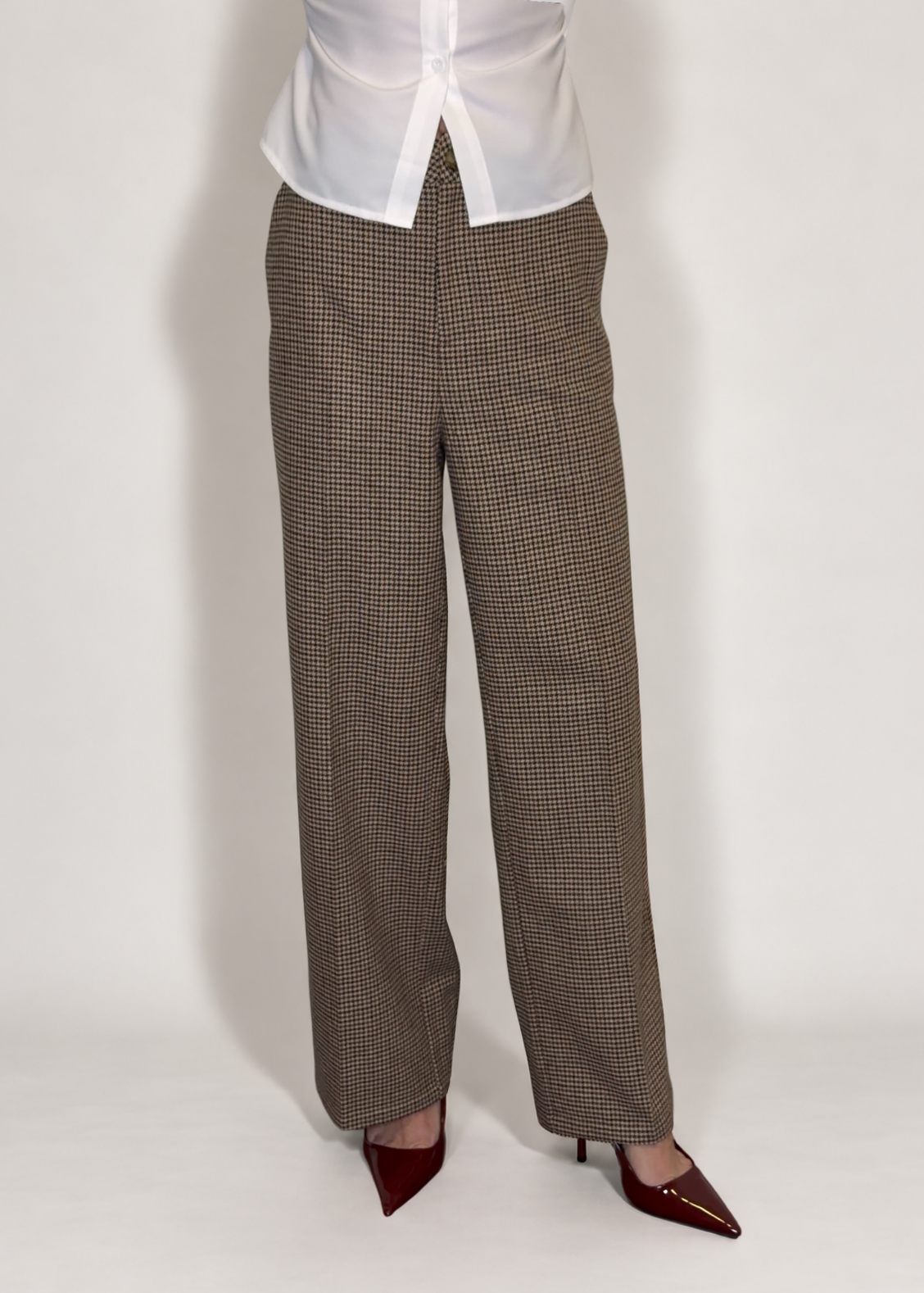
A fine knit introduces a softer surface above tailored trousers without requiring the whole outfit to become casual. The contrast comes from the relationship between the two garments: the top follows its own drape while the trousers provide a defined lower line. Instead of beginning with accessories, look at the neckline and where the knit finishes. Those decisions establish most of the outfit's shape.
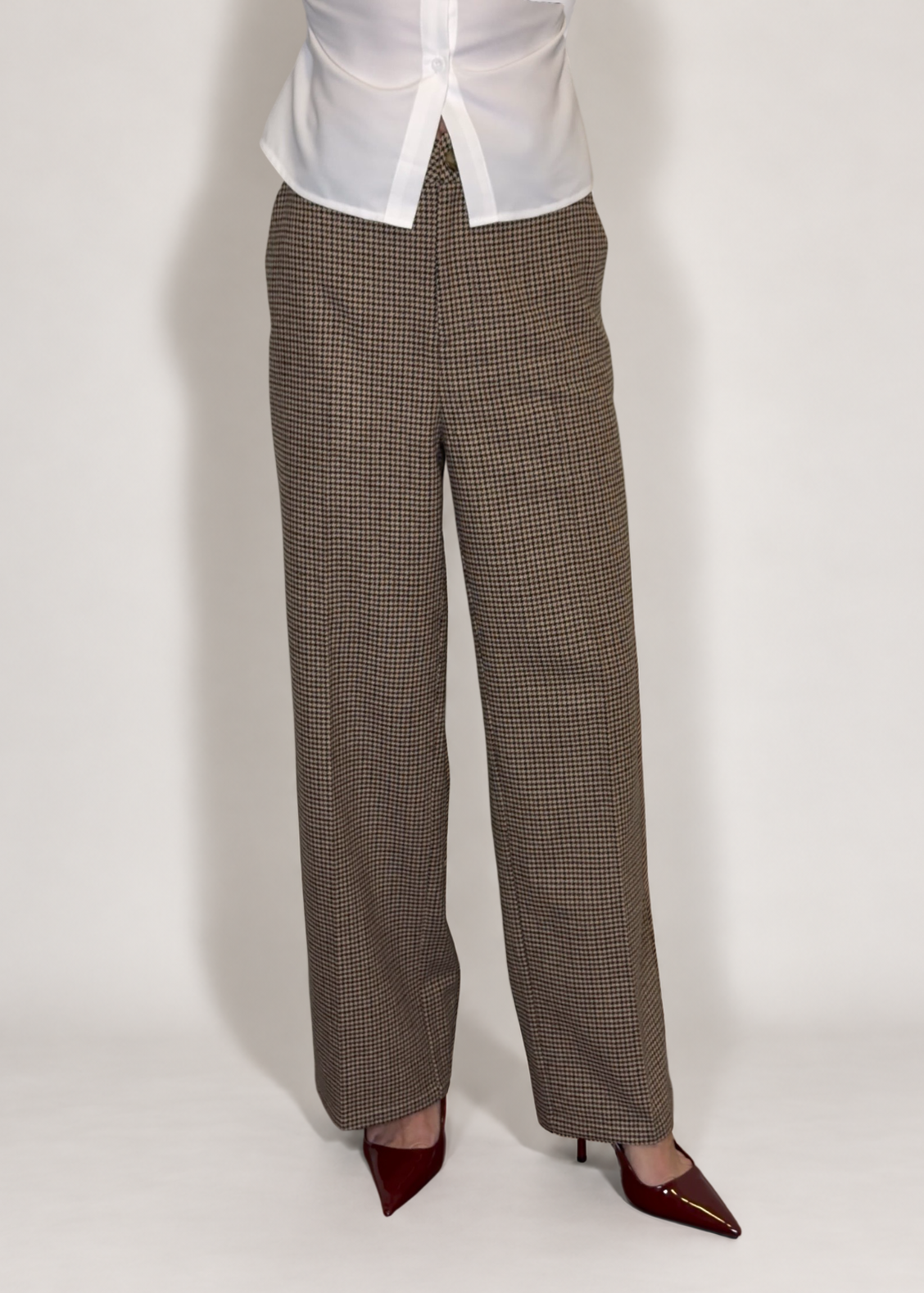
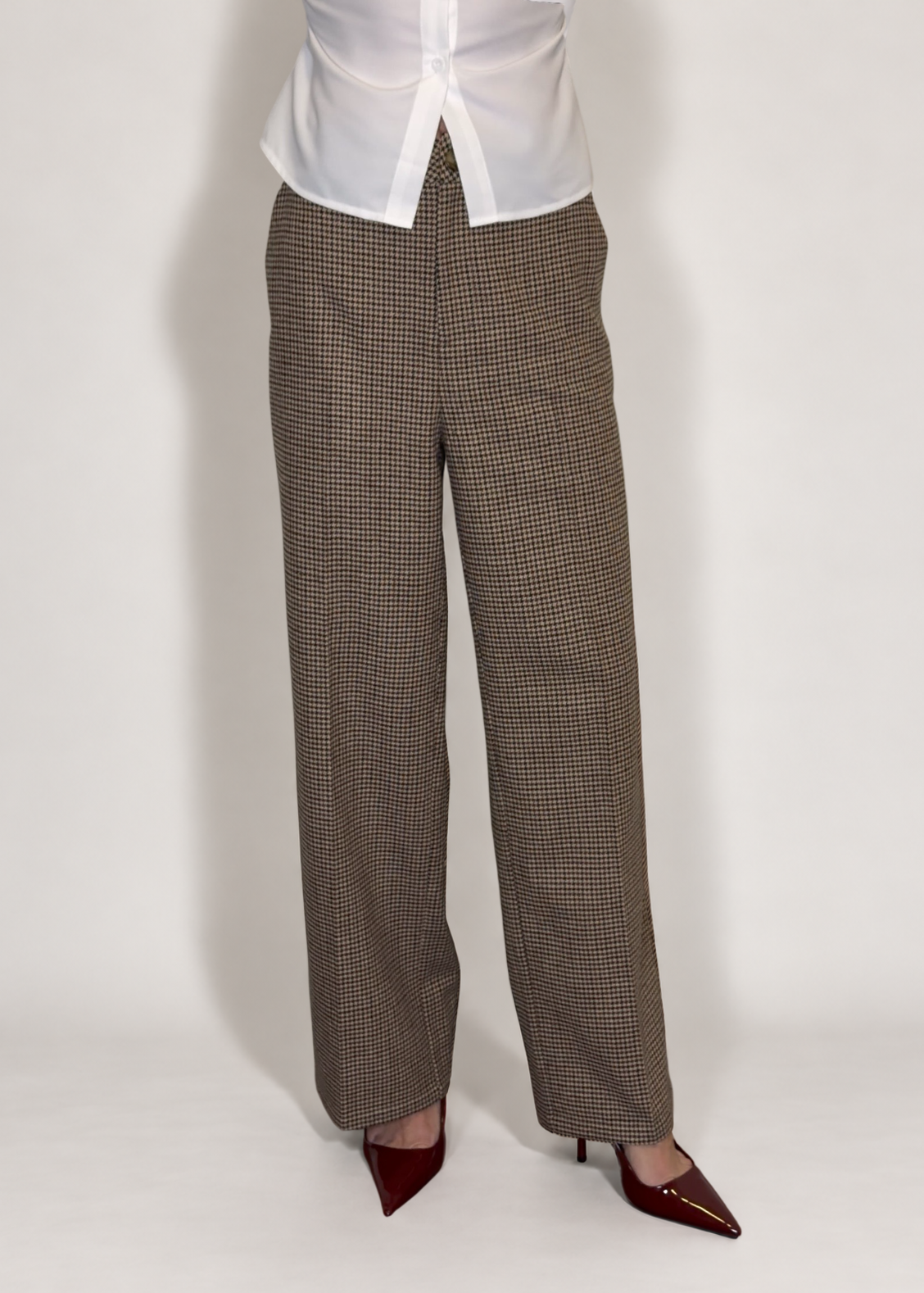
The houndstooth Brock Trouser has a slightly high waist and a straight leg leading into a subtle flare. It is fully lined, has a 30% wool blend and is available to pre-order. Fine knits mentioned here are reader-owned layers to try with the trousers, rather than pieces supplied within the Brock collection.
Compare necklines against the full leg line
A crew neck creates a compact upper shape, while a V-neck introduces an opening beneath the face. A higher neckline can produce a more continuous area of fabric. Try two options with the same trousers and shoes so the difference remains clear. Judge the entire outfit from a few steps away, not just the knit in a close mirror.
The neckline does not need to be chosen according to a fixed body-shape rule. Consider how you like to wear your hair, whether you want jewellery near the face and how the top feels when seated. A neckline that you constantly pull into place may be less useful than a familiar one that stays comfortable throughout the day.
Let the hem find its place
A knit finishing near the trouser waist gives the upper and lower halves a clear meeting point. A longer knit covers more of the trousers and creates a softer division. Before tucking anything, let the top hang naturally. Check whether its ribbed hem draws in, sits flat or gathers in a way you do not enjoy.
If you want a little waist definition, try a small front adjustment rather than pushing the whole knit beneath the waistband. The fabric's thickness matters: even a fine knit can create more volume when folded. Walk and sit after making the adjustment. Keep it only if the top stays comfortable and the resulting drape feels deliberate.
Use the surface contrast before adding colour
A plain knit can make the houndstooth easier to read because it introduces texture without another print. Hold a smooth knit and one with a lightly visible knitted surface beside the trousers. The latter may provide enough interest on its own. There is no need to add a scarf simply because the top is plain.
Choose shoes that suit your plans and look at how their outline meets the trouser flare. A familiar flat keeps the combination grounded; another shoe can change the mood if you prefer. Leave the top unchanged while comparing footwear. This helps you separate a shoe decision from a neckline or hem decision.
Check the extra layer rather than assuming it
If you add the coordinated Brock Blazer, another pre-order piece, test the knit beneath it. Bring your arms forward and check the sleeves together. A top that sits well alone may take up more room under a jacket, particularly where the neckline or cuffs are folded. The actual layering test should guide your choice.
Explore the Brock collection after deciding whether you want the knit-and-trouser outfit alone or a coordinated jacket as well. Look at the final combination standing, seated and in motion. The softer result comes from a knit whose neckline, hem and drape work with the trousers, rather than from adding as many comfortable-looking layers as possible.


Leave a comment
This site is protected by hCaptcha and the hCaptcha Privacy Policy and Terms of Service apply.