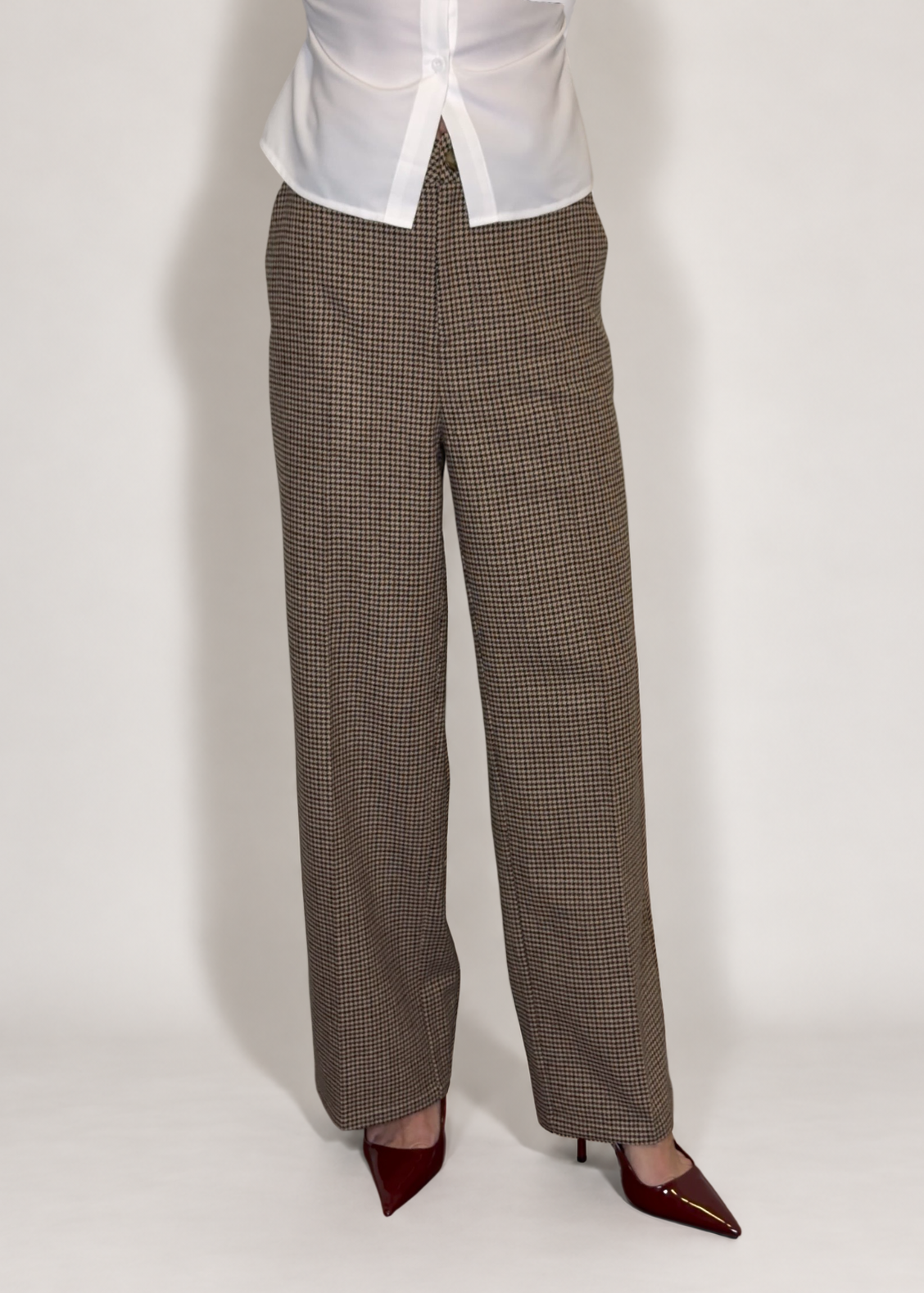
Tailored trousers and a shirt can make a complete work outfit without requiring a jacket as the main feature. The shirt provides a quiet upper half, leaving the trouser's pattern and leg line visible. Start by choosing how much definition you want around the waist and shoulders. A crisp outline and a softer one can both work, but they create different relationships with the tailoring below.
The Brock Trouser is fully lined, made with a 30% wool blend and offered for pre-order. Its slightly high waist and straight leg, moving into a subtle flare, give this outfit its lower outline. Shirt, shoe and accessory suggestions here refer to clothing you already own; no additional shirt range is implied.
Give the shirt a clear shape
Compare a shirt with a defined shoulder against one with a softer drape. The first can make the outfit feel more precise; the second introduces contrast against the tailored trousers. Keep the shirt colour plain for this initial trial so you can judge the silhouette. A busy print would make it harder to isolate the effect of the shirt's shape.
Look at where the shirt ends in relation to the waistband. A little fabric left over the waist can feel relaxed, while a smooth tuck gives a clearer division between upper and lower halves. Make that decision using the shirt's actual length and thickness. Extra fabric that bunches under the waistband may be less useful than a simpler, lighter layer.
Treat the collar and cuffs as the finishing detail
You do not need a statement necklace to give a shirt outfit character. The collar already frames the face, and the cuffs provide another defined edge. Compare the shirt fastened higher with a more open neckline, staying within your workplace's expectations. Choose the version that sits comfortably rather than one that needs repeated adjustment.
Check the sleeves at your desk or table. Long cuffs that brush your hands may suit one activity but become inconvenient for another. If you adjust the cuffs, make the two sleeves sit in a way you enjoy and can maintain through the day. The aim is a useful working outfit, not a perfectly arranged photograph.
Keep the lower half easy to read
Choose a familiar shoe that works with the trouser hem and the walking involved. A simple flat or loafer can leave the leg line visible without adding another strong visual element. Try the exact pair while moving. The trouser's subtle flare will meet different shoe shapes differently, so assess that relationship with your own garments.
A practical bag can follow the same quiet approach. It does not have to match the shoes precisely. If the shirt and trousers already feel balanced, let the bag do its carrying job without adding another pattern. One small piece of jewellery or a watch may supply all the remaining detail you want.
Decide whether a jacket adds anything
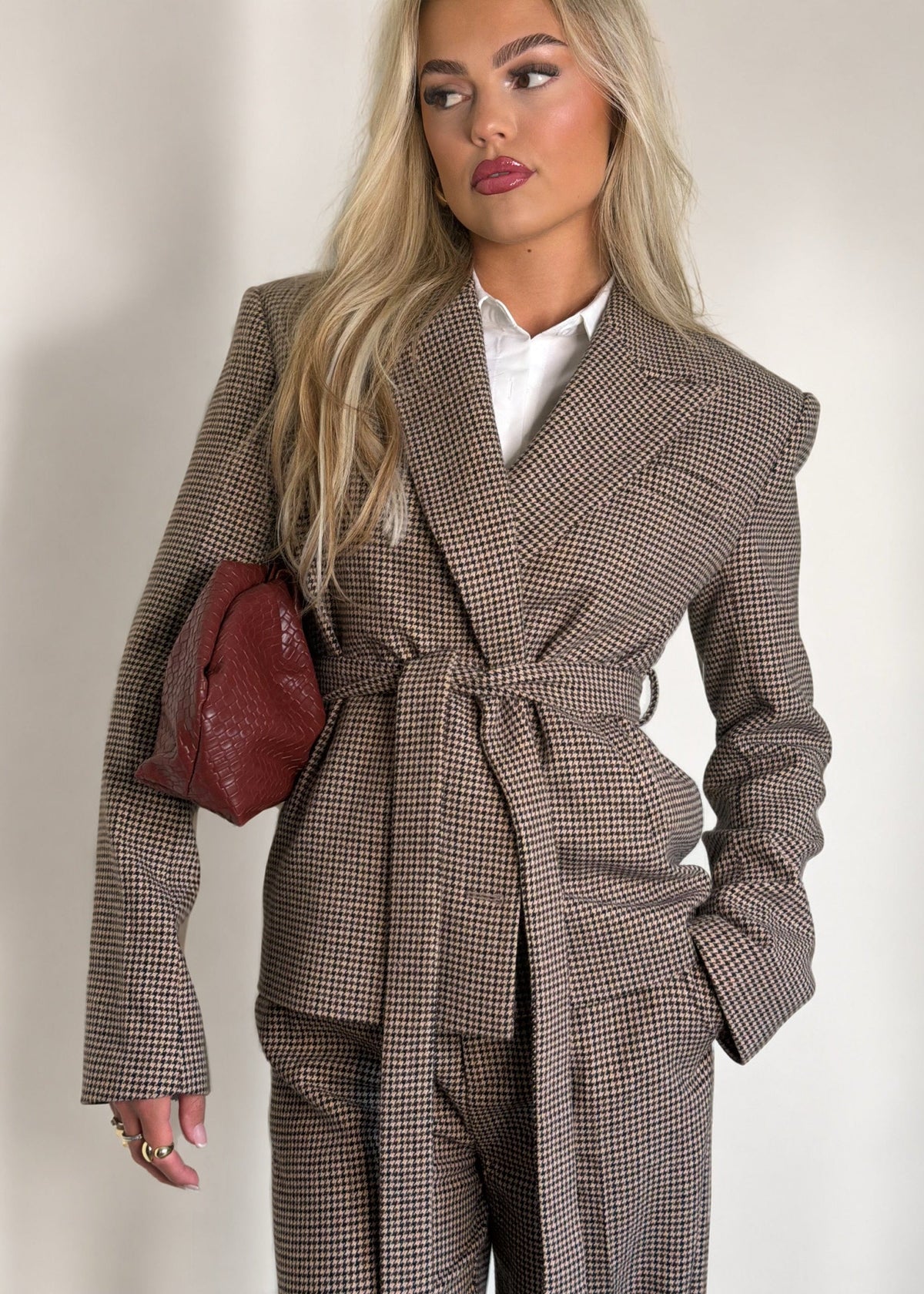
The coordinated Brock Blazer is also available to pre-order. Adding it creates a more complete tailored combination, but the shirt-and-trouser outfit should still feel resolved when the jacket comes off. Check the collar and sleeves beneath the blazer rather than assuming the layers will sit exactly as they did on their own.
Use the current product-page size-guide button when comparing the trouser measurements with a similar garment you own. Then view the Brock collection with your intended base outfit in mind. A quieter work look comes from a shirt that supports the trousers, a usable fit and a few deliberate finishing choices.


Leave a comment
This site is protected by hCaptcha and the hCaptcha Privacy Policy and Terms of Service apply.