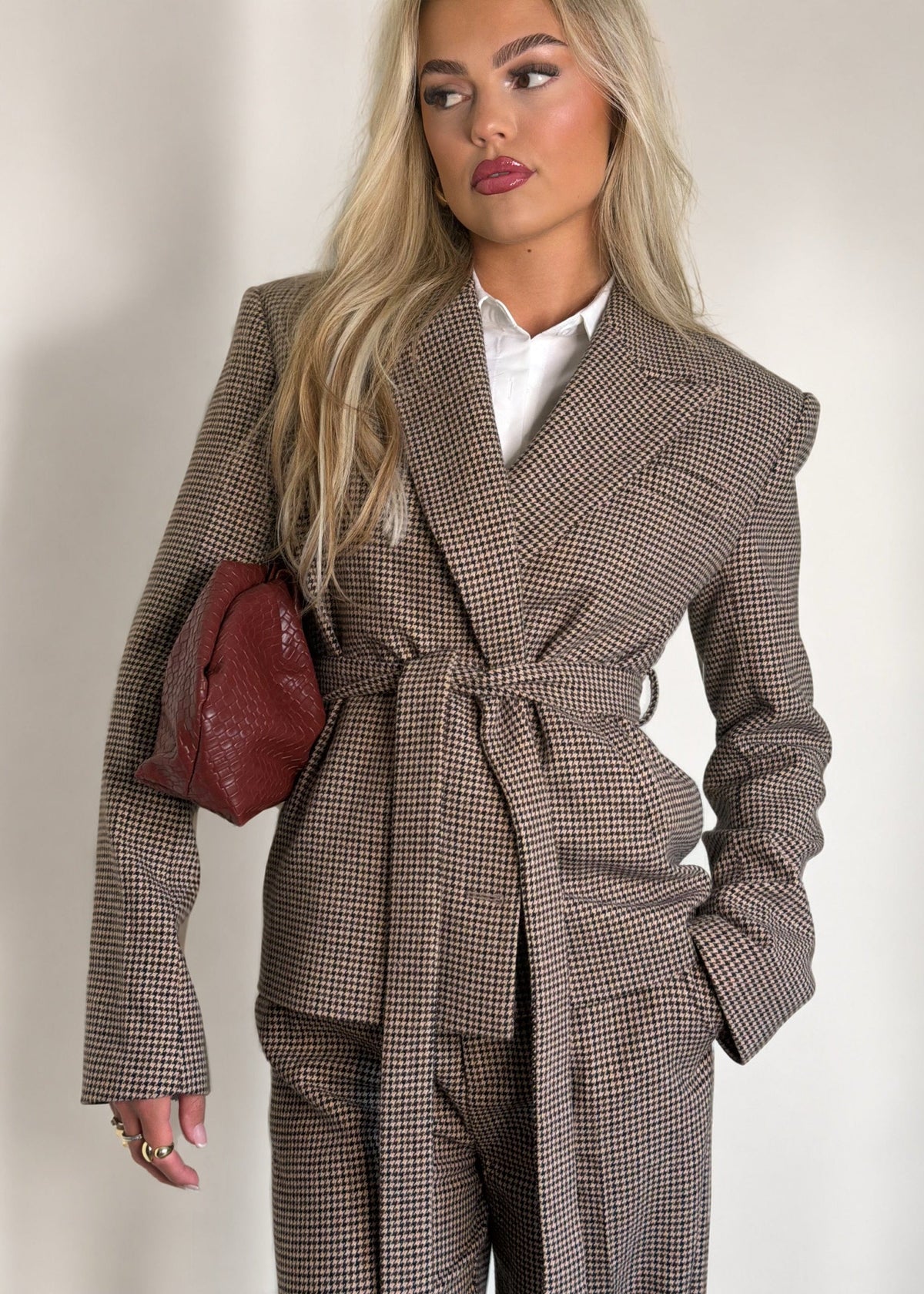
A scarf can become the largest detail near the neckline, especially when a blazer already brings pattern and shape. Decide what you want the scarf to do before placing it in the outfit. It may be an outdoor layer you remove on arrival, or a small styling detail you keep indoors. Those are different roles, and each calls for a different comparison with the jacket.
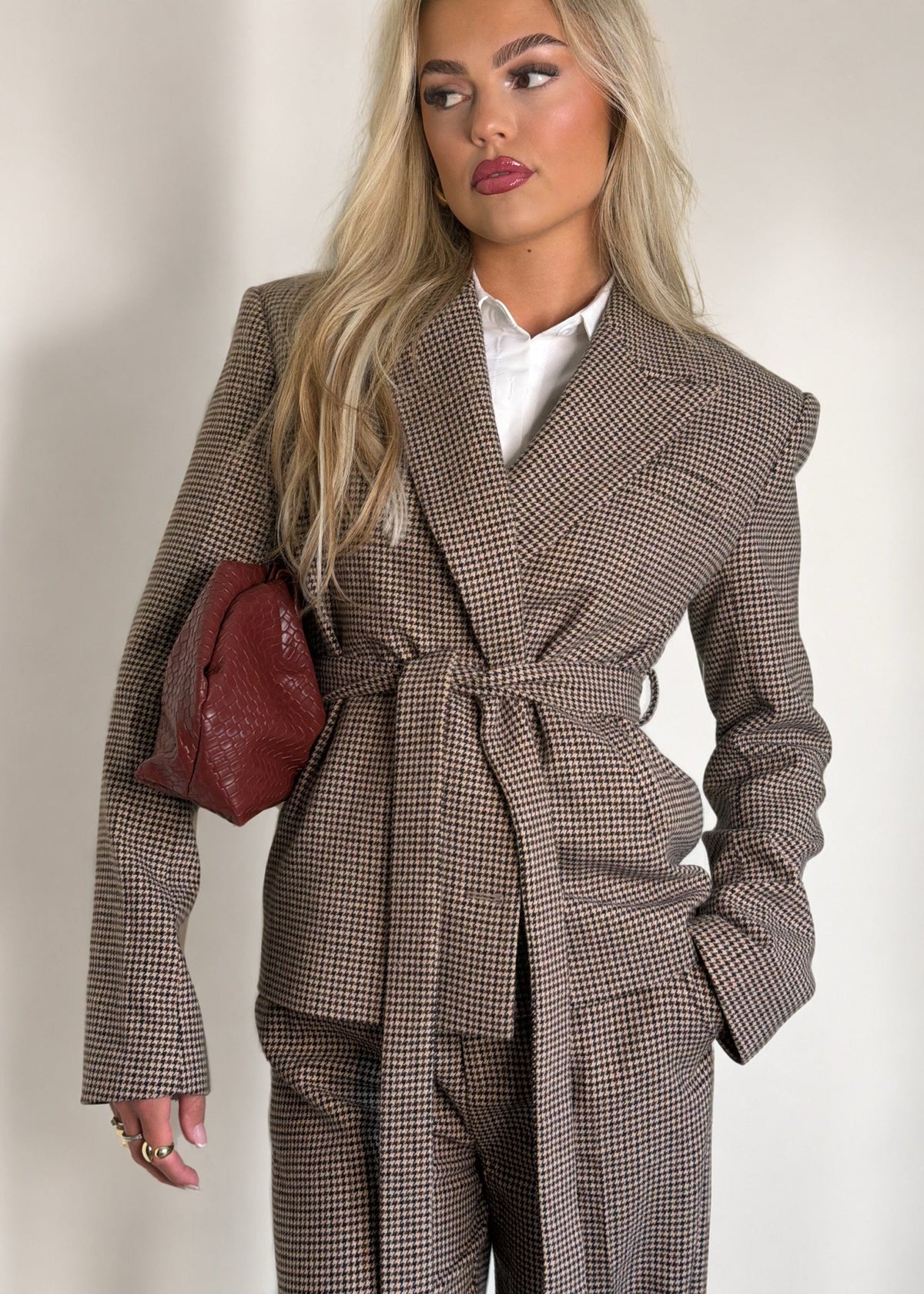
The Brock Blazer provides houndstooth, full lining and a 30% wool blend. It has detachable shoulder pads, so the upper outline is already something you can choose. Use a scarf from your own wardrobe and assess its actual size and feel. This guide considers visual placement, not an unverified promise of warmth from the jacket or scarf.
Decide whether the scarf stays on
Think through the point when you arrive indoors. If you expect to remove the scarf, check the outfit without it as well as with it. The top's neckline and the jacket should still feel complete once that layer is gone. A scarf can frame an arrival look without becoming essential to every moment of the outfit.
If you want to keep the scarf as an indoor detail, choose an arrangement you are comfortable wearing while sitting and moving. Avoid building a precise position that needs repeated adjustment. The useful version is the one you can enjoy in ordinary use, with a clear role beside the blazer rather than an extra detail added simply because it is available.
Compare the scarf's volume
Place the scarf with the jacket and look at how much of the upper garment it covers. A larger scarf may conceal more of the neckline and shoulder area; a smaller one leaves a different amount visible. Choose the version that gives the jacket the presence you want. There is no need to cover or reveal a fixed amount of houndstooth to make the combination correct.
If the scarf becomes the main feature, decide whether you are happy with that. The jacket can still provide the supporting frame. If you want the blazer's pattern to lead, compare a quieter scarf or an arrangement with less material visible. You are changing the emphasis between two real items rather than applying a general rule about how patterned clothes should be accessorised.
Connect the details selectively
A shared shade can link the scarf with your top or shoes, but one connection is usually enough for this exercise. Keep the other accessories familiar while testing it. If you enjoy two patterns together, notice which one leads and whether their scales feel clear at an ordinary viewing distance. A plain scarf can stay in the comparison as a quieter alternative.
The coordinating Brock Trouser or Brock Shorts adds more of the capsule's pattern below the jacket. Consider that whole outfit before adding scarf detail. Your own lower garments provide another setting when you want the blazer to be the only tailored patterned element.
Plan where the scarf goes afterwards
If the scarf is an outdoor layer, decide where you will put it when you remove it, together with the coat or bag you expect to carry. That keeps the arrival outfit practical as well as considered. Explore the Brock collection for current pre-order garments, using the blazer's current product-page guide before buying. A useful scarf arrangement respects the role you chose, with the jacket's detail visible to the degree you enjoy and the outfit remaining complete throughout the day.



Leave a comment
This site is protected by hCaptcha and the hCaptcha Privacy Policy and Terms of Service apply.